
Forty years of experience. Twenty years of one plan.
I founded Logos Consulting in 1986 to advise business founders. For around twenty years I have been building products and companies that make energy simpler, more decentralised and fit for a circular economy. Here are the milestones, with year, place and, where they exist, public sources.
What connects these milestones?
One idea: energy belongs in the hands of the people who use it. If you can generate your own power, keep materials in the loop and share energy digitally, you are independent.
The electric car in China, balcony solar, refurbishing used modules and, today, tokenisation are steps along that path. Most people have only seen some of them, usually the product and not the person behind it. This page tells how they fit together.
-
Logos Consulting: advice grounded in reason
In 1986 I set up Logos Consulting, my own consultancy. It started with business founders: testing the idea, running the numbers, finding finance and the first customers. Logos is the Greek word for reason, and a new business has to be reasoned out properly before it can afford to be bold.
This work gave me the method I still use today: think about a product from the market backwards, plan manufacturing early, and build the sales channel before the warehouse is full.
-
China
Two decades working with and in China
I worked with and in China for around twenty years. There I learned how quickly a sample can turn into series production, and how important it is to stand on the supplier's production line yourself. Without that time there would have been no Plug & Save modules.
-
German Electric: an electric car from Shandong
A small project with a big effect on my thinking. From autumn 2009 I led the conversion of a petrol car into an electric car for Jinan Dragon Investment Consulting in Jinan, under the project name German Electric. On a budget of around 20,000 euros we built a five-seat family car with a range of 180 kilometres and a top speed of 130 km/h, controlled through a Windows XP touchscreen. The car was finished in January 2010. At the time, electric cars were still a rarity in China.
The car was never a production model. But it showed that the car, the battery and the solar roof belong together.
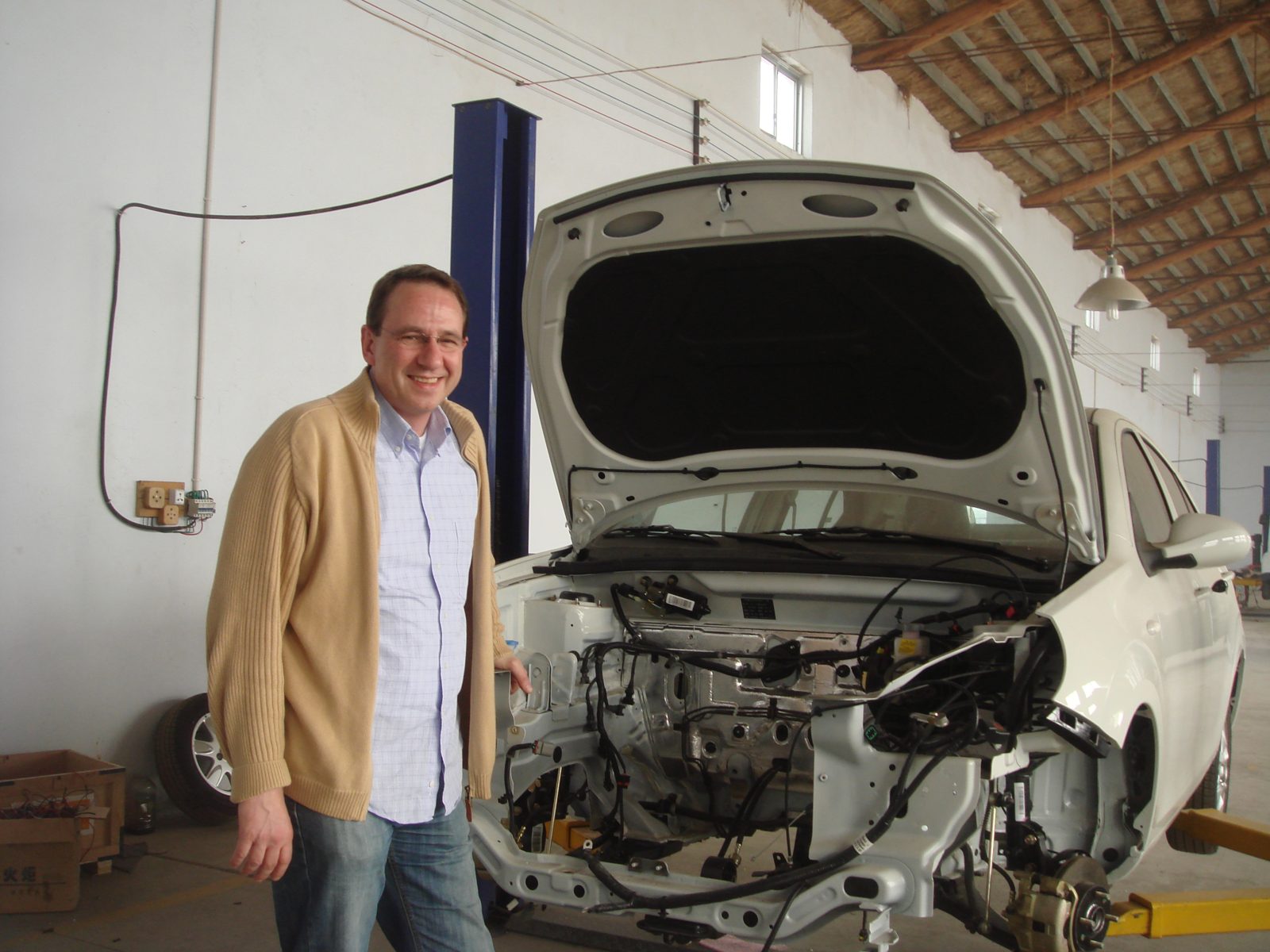
In the workshop in Zouping (Shandong), October 2009 -
Plug & Save: the first balcony solar systems of their kind
In 2011 we started work on Plug & Save at Sun Invention: a solar module with a built-in inverter and storage that you simply plug in. In spring 2012 the first modules were manufactured in Wenzhou, China, and I signed them off at the factory. On 8 August 2012 we officially presented Plug & Save in Kassel. Holger Laudeley and I did this together, from the flights to China to the meetings with partners. In December 2012 the US magazine Inhabitat described it as the world's first mobile solar panel with built-in battery storage and inverter.
Plug & Save became widely known through the German cinema documentary „Leben mit der Energiewende“ (Living with the Energy Transition) by Frank Farenski, released in November 2012, in which Holger Laudeley appears.
The idea behind it was simple: every tenant and every family with a balcony should be able to generate their own power, without an installer and without a permit marathon. It grew into a movement: in Germany alone, around 1.5 million plug-in solar devices are registered today.
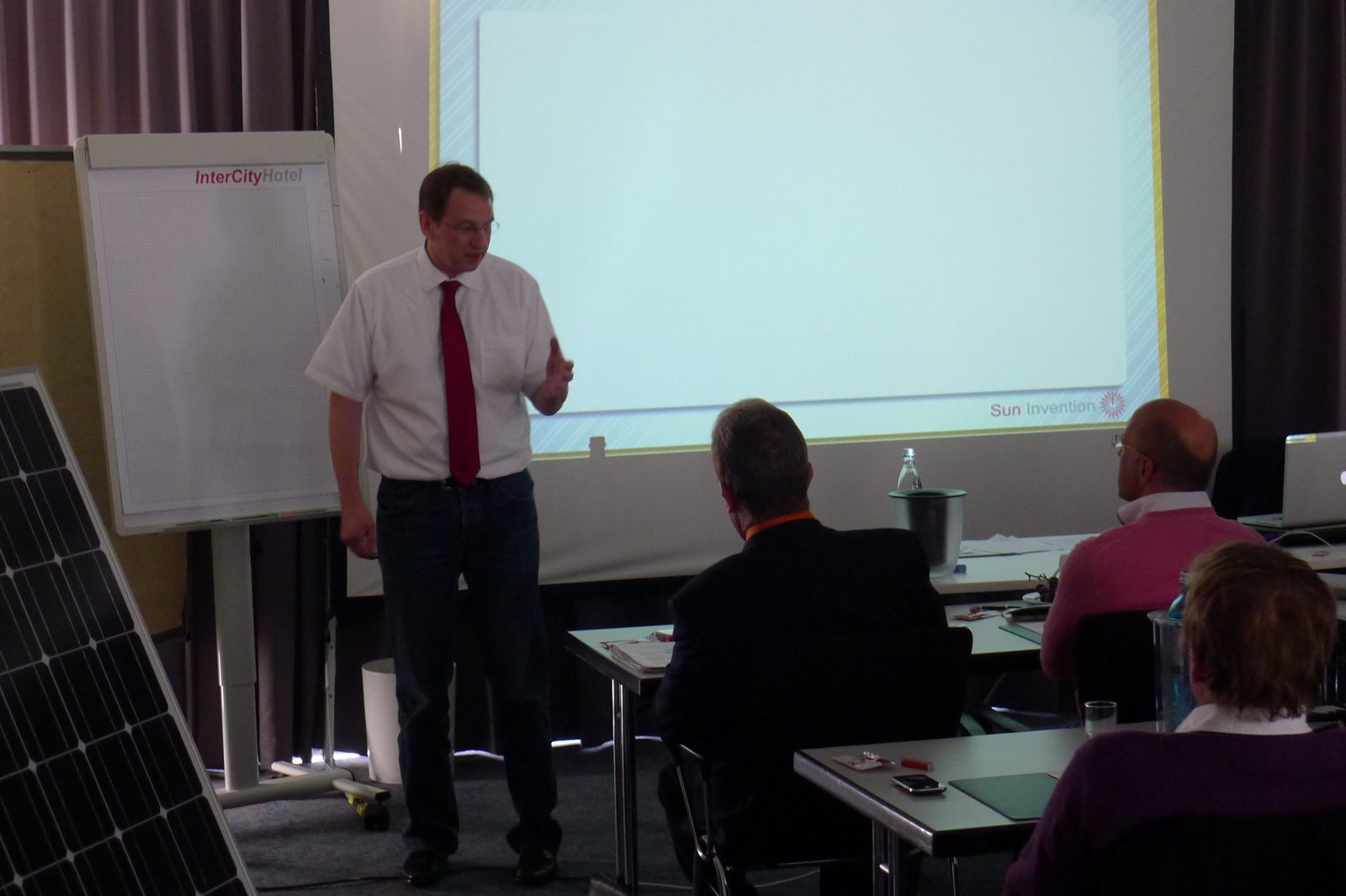
Launch of Plug & Save at the InterCity Hotel Kassel, 8 August 2012 -
Against the VDE's warning
As technical director and later COO of Sun Invention, I brought Plug & Save to market. In April 2013 the VDE, Germany's electrical engineering association, publicly warned against plug-in solar systems. I pushed back: the existing standards were never written for mini solar systems. In the same year production started at ALGATEC Solar in Brandenburg, we showed Plug & Save at Intersolar Europe in Munich, and we set up a joint venture for manufacturing in Huangshi, China.
In September 2013 pv magazine made plug-in modules the hook for its special focus “Revolution im Netz” (revolution in the grid), with Che Guevara on the cover. The opening article starts with two sentences of mine, including: “It is not forbidden for the meter to run backwards.” A few pages later the issue names Sun Invention and GP Joule as the two manufacturers with the strongest public presence.
We are not a think tank, we are a do tank.
Toralf Nitsch, managing director of Sun Invention · pv magazine 02/2013, p. 52 (translated from German) We do not offer DIY kits; we set the benchmark for quality and safety.
Toralf Nitsch, April 2013 (translated from German) · Solarserver 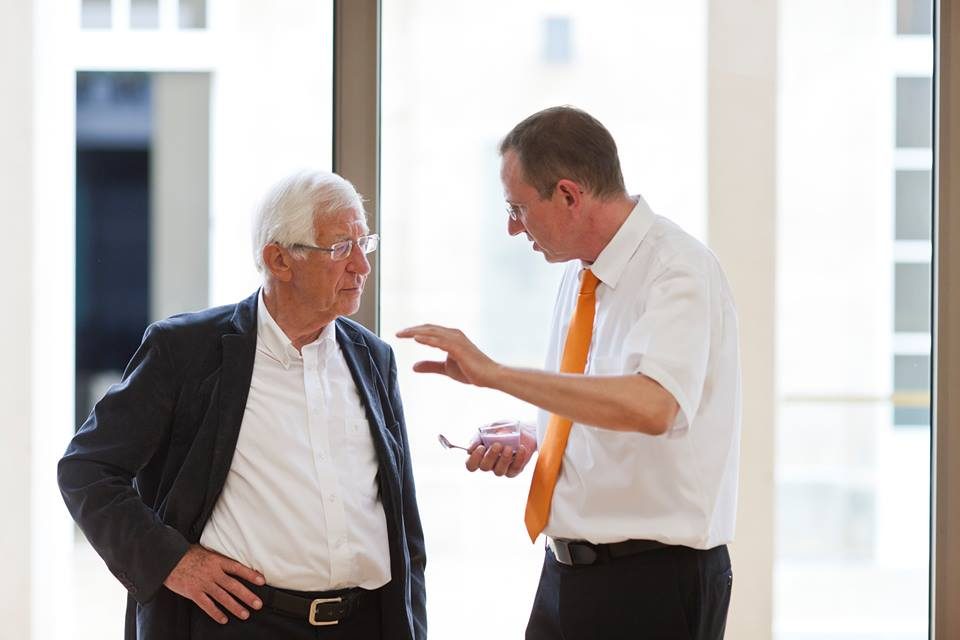
Toralf Nitsch (right) in conversation with the journalist Franz Alt, 2013 -
Baseload Buster: plug-in solar with storage
In December 2014 we launched the Baseload Buster at Sun Invention, simultaneously on Kickstarter: four solar modules with power optimisers and a box with a controller, a micro-inverter and a lithium battery. Everything came ready to plug into an ordinary socket. During the day the power covered the household's base load, and the battery took over at night. We presented it as the first solar storage system that runs from a plug.
That press release already contained the sentence that is still my programme today: digital, decentralised and bidirectional will be the key words of the future.
-
World Forum for Foreign Direct Investment in Liverpool
In June 2018 I moderated a panel at the World Forum for Foreign Direct Investment in Liverpool, an international meeting of investors, investment promotion agencies and governments. CNN anchor Richard Quest was also on stage.
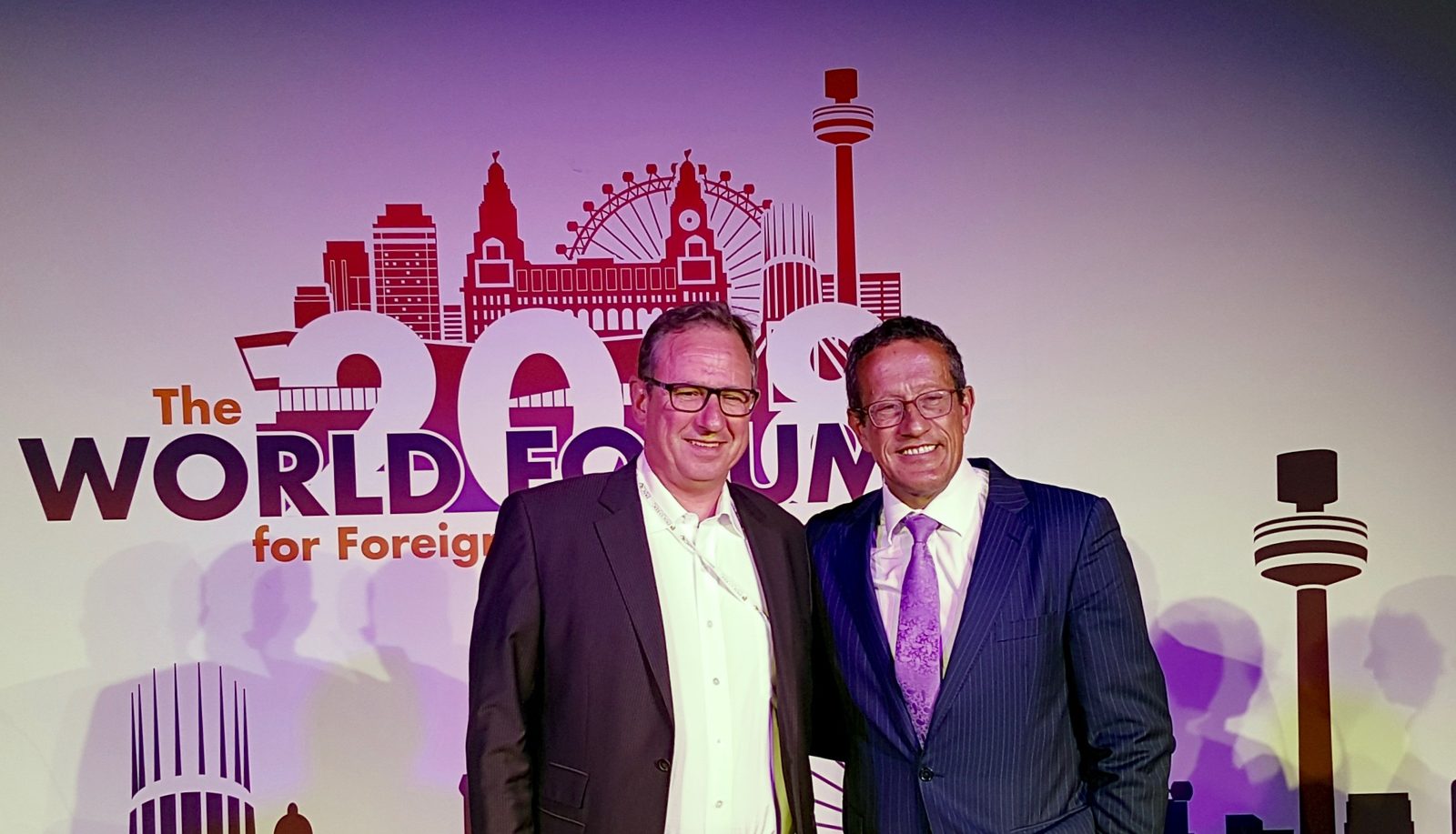
Toralf Nitsch (left) with Richard Quest (CNN) at the World Forum for Foreign Direct Investment, Liverpool, June 2018 -
International FDI Summit in Huzhou, China
In October 2019 I sat on the “Sustainable Development” panel at the International FDI Summit in Huzhou, Zhejiang province. The question: what should governments and companies do to make sure they invest and build responsibly? The organiser was the same as in Liverpool, and Richard Quest was there again.
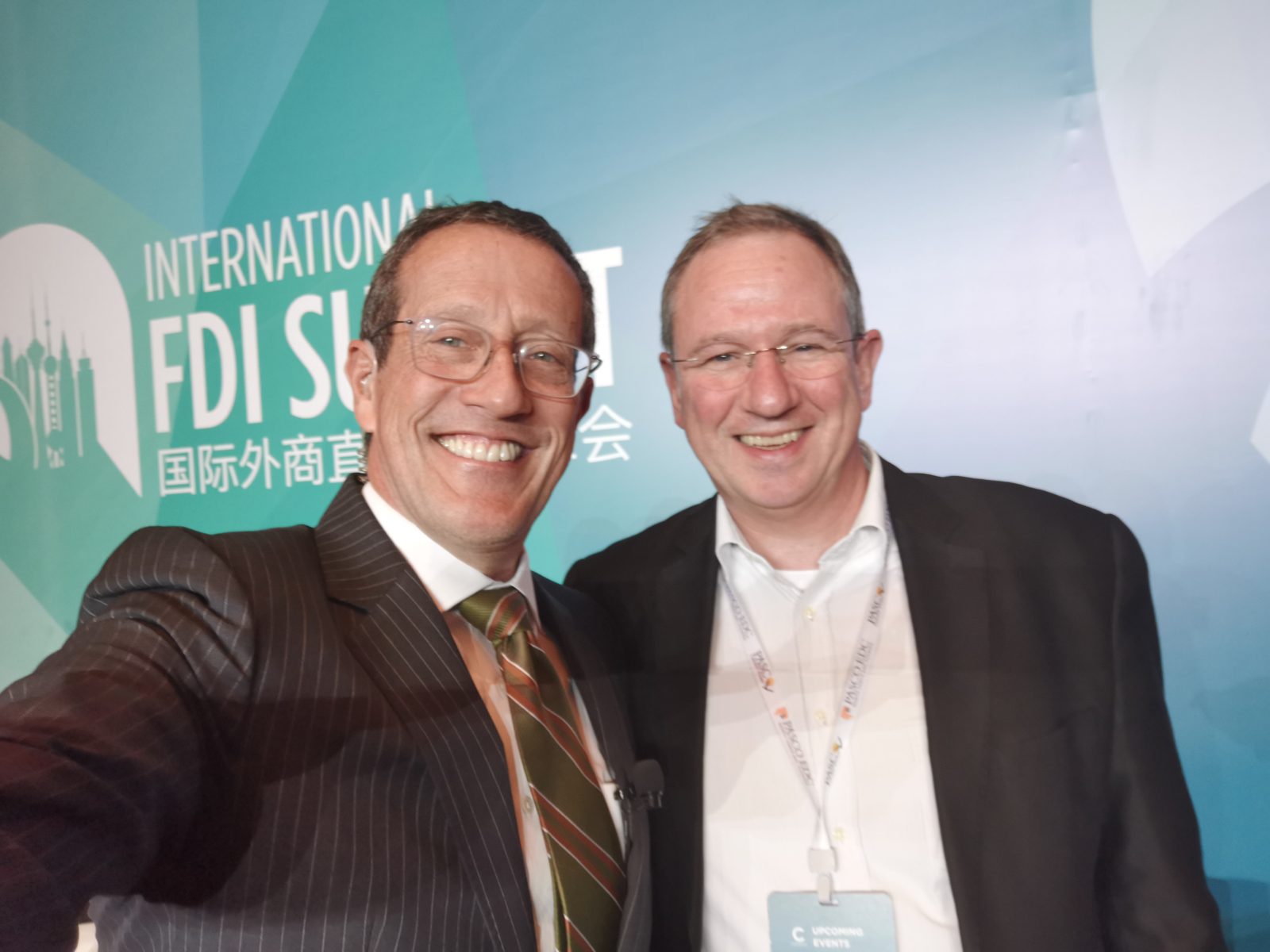
With Richard Quest at the International FDI Summit in Huzhou, China, October 2019 -
A legal framework for used solar modules
A used solar module is either waste or a product. For a long time there was a grey zone in between, in which working modules were shredded because nobody knew for certain whether they could be resold. In 2020 I led the preparation of an expert legal opinion, with the support of a lawyer, on how used modules should be handled. Its core finding: a module that is tested, refurbished and placed on the market again as a product counts as re-use under the German engineering guideline VDI 2343 (Re-Use 1) and falls outside waste law. Transport and testing follow Annex VI of the WEEE Directive 2012/19/EU.
That sounds dry. But it is the precondition for millions of decommissioned modules becoming a market instead of a mountain of waste.
-
Rinovasol and the SolarWorld equipment
With the Rinovasol Group I built up the refurbishment of used modules on an industrial scale. In January 2021 Rinovasol took over production equipment from the insolvency estate of SolarWorld AG, once Germany's largest solar manufacturer, and used it for its own refurbishment lines. As COO I drove the international expansion. By autumn 2021 Rinovasol was active in more than twenty countries. Today Rinovasol is part of the GE4A group.
Our work extends the period of use, in that used photovoltaic modules are not regarded as waste but are prepared to be used again to generate energy.
Toralf Nitsch, May 2021 (translated from German) · Solarserver 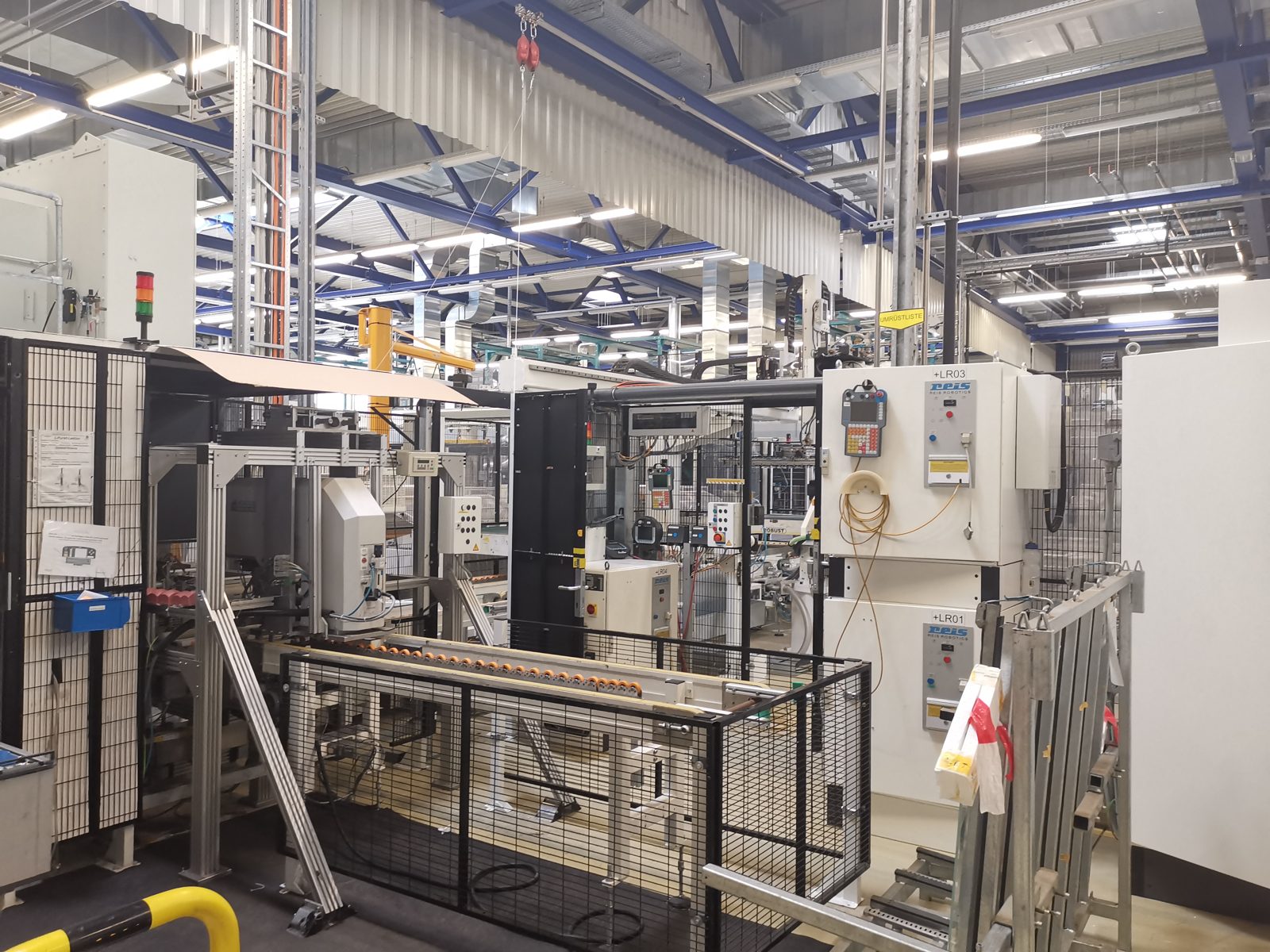
SolarWorld production equipment during the inspection in June 2020 -
GE4A
GE4A: the circular economy at scale
I co-founded GE4A Group B.V. (Green Energy for All) with partners. GE4A treats solar modules as infrastructure. The process is called reCOGNISE, reUSE, reCYCLE: first test and record digitally, then reuse what is safe, and recover materials only from the rest.
Today GE4A has around 40,000 tonnes of annual processing capacity together with network partners in Bulgaria, Germany and Spain, and its own plant in Pazardzhik.
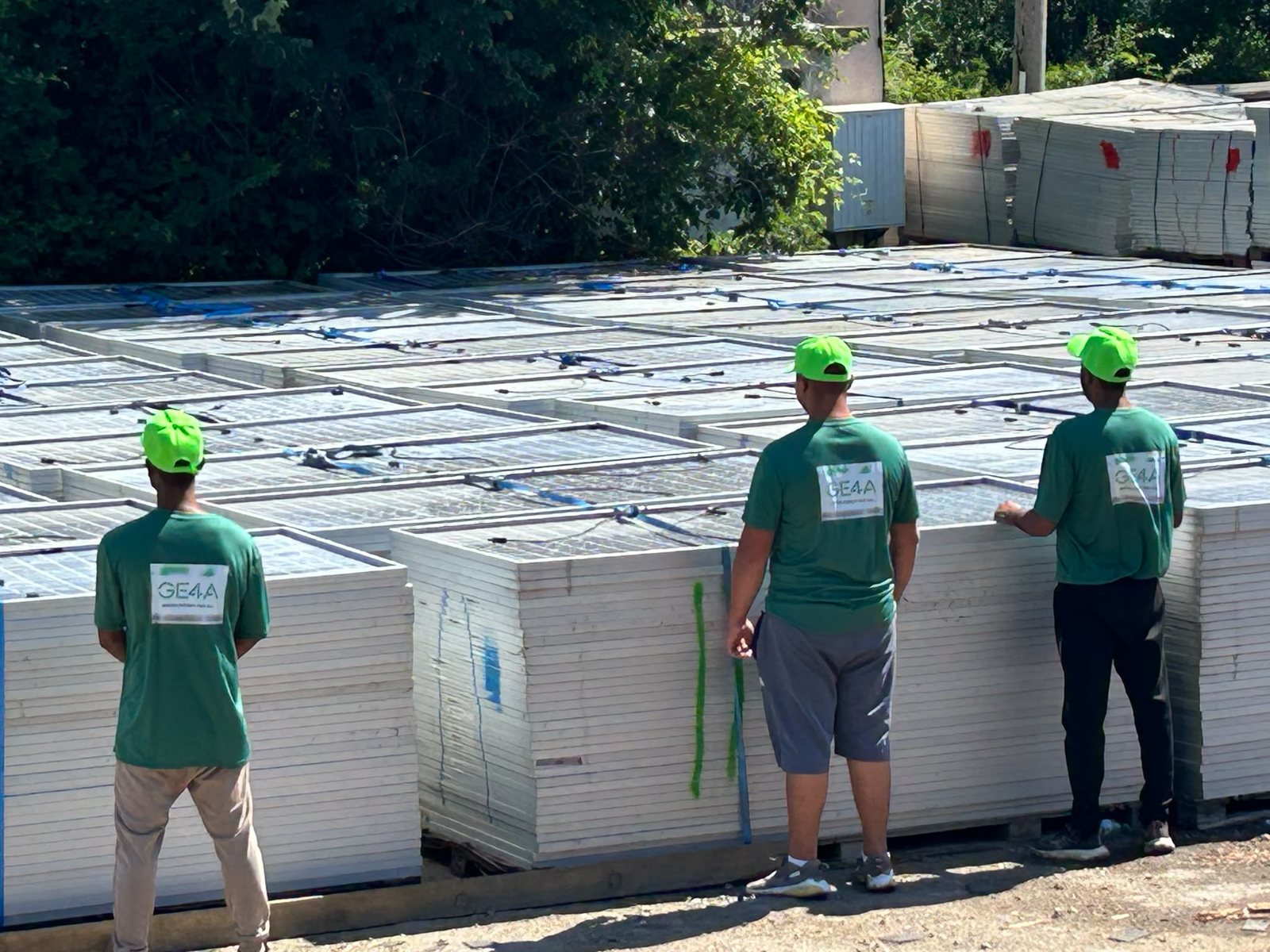
The GE4A team checking used modules in the factory yard in Pazardzhik, Bulgaria -
European research: PVSmile
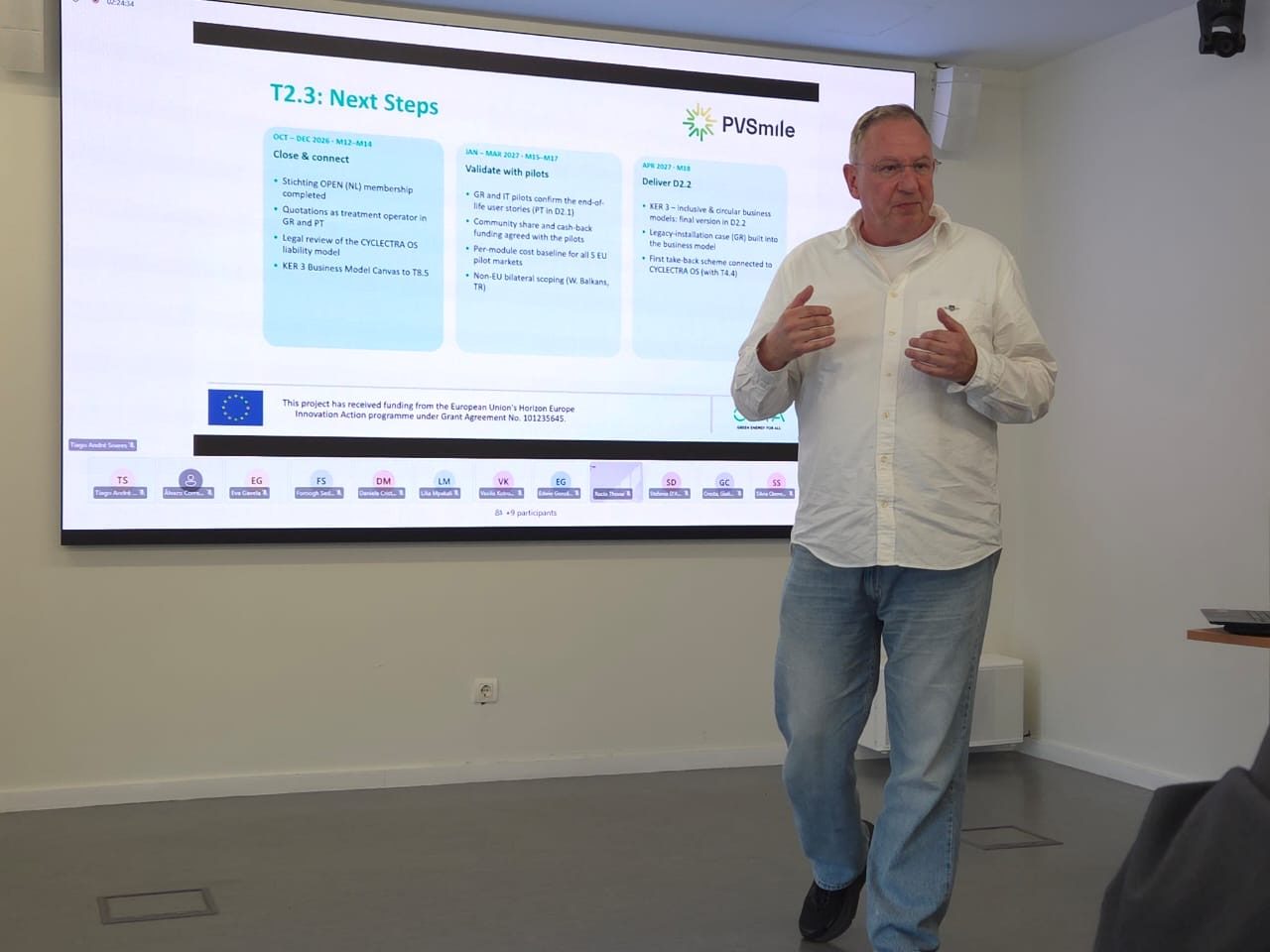
PVSmile started in November 2025, a Horizon Europe project with 28 partners from ten countries, coordinated by the National Technical University of Athens (NTUA). Within it, GE4A works on the blueprint for energy communities so that energy sharing becomes possible everywhere in the EU. Through Rinovasol the group is also involved in RE-SKIN and HEPAFLEX.
-
The next step: share energy digitally and fairly
I run GE4A, advise clients through Logos Consulting and speak on stage about the future of energy. RHEINSILBER, a reCYCLING plant on the Lower Rhine, is under construction together with partners. My subject for the coming years: energy that is recorded digitally, represented as a value and shared within communities. Tokenisation, energy sharing and vehicle-to-grid are the tools for this. Balcony solar was the beginning. What comes next is a grid in which every participant can also be a producer.
What drives Toralf Nitsch?
The conviction that energy is a common good. Anyone who can generate it should be allowed to, and whatever has been produced should stay in use for as long as possible.
I am a doer, and I have no time for concepts that stay in a drawer. Almost everything I have built was laughed at first: the electric car, the plug-in module, the trade in used modules. Today they are markets. My motto for the next stage is "Free Your Energy".
Personal
I grew up near Hanover. Today I live in South Limburg in the Netherlands, half an hour from Aachen, Liège and Maastricht. I work in German and English and have basic French, Italian, Thai and Mandarin.